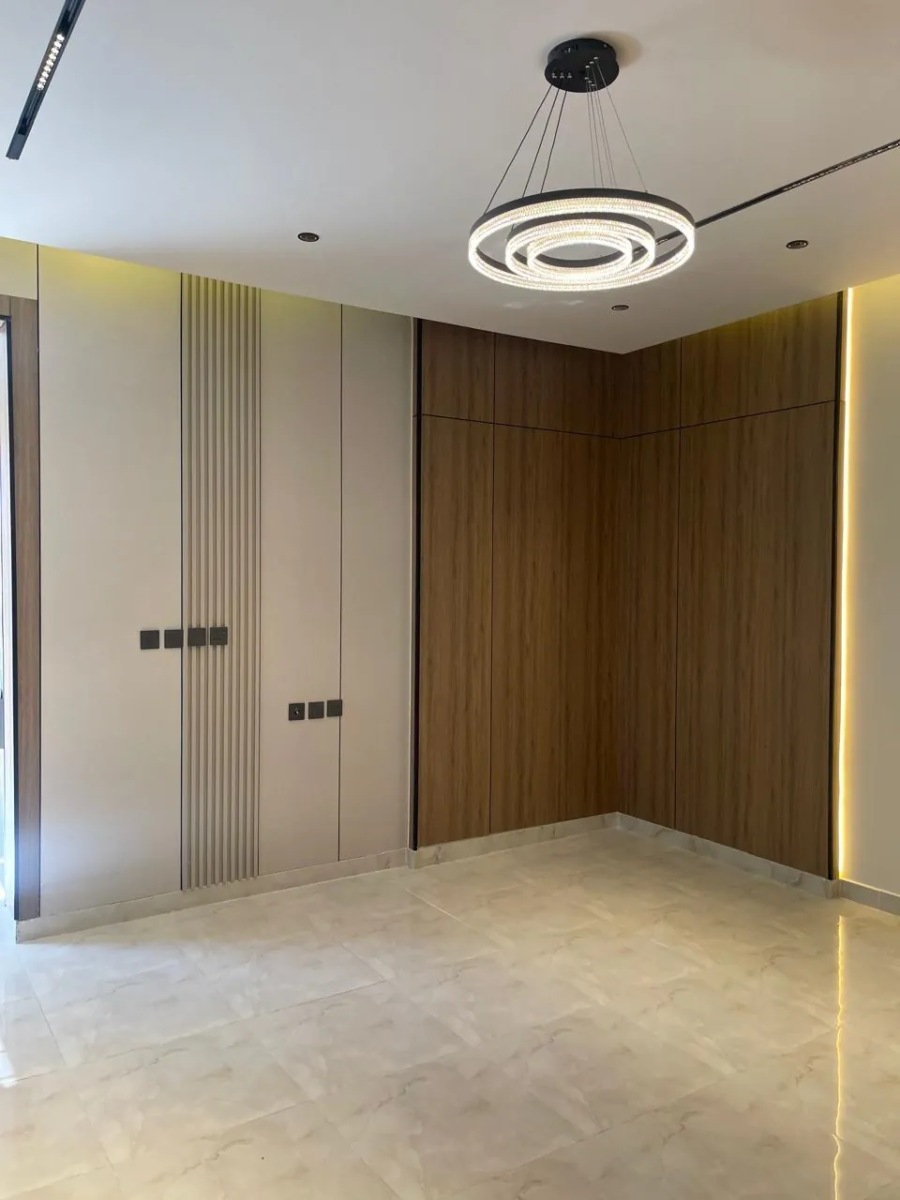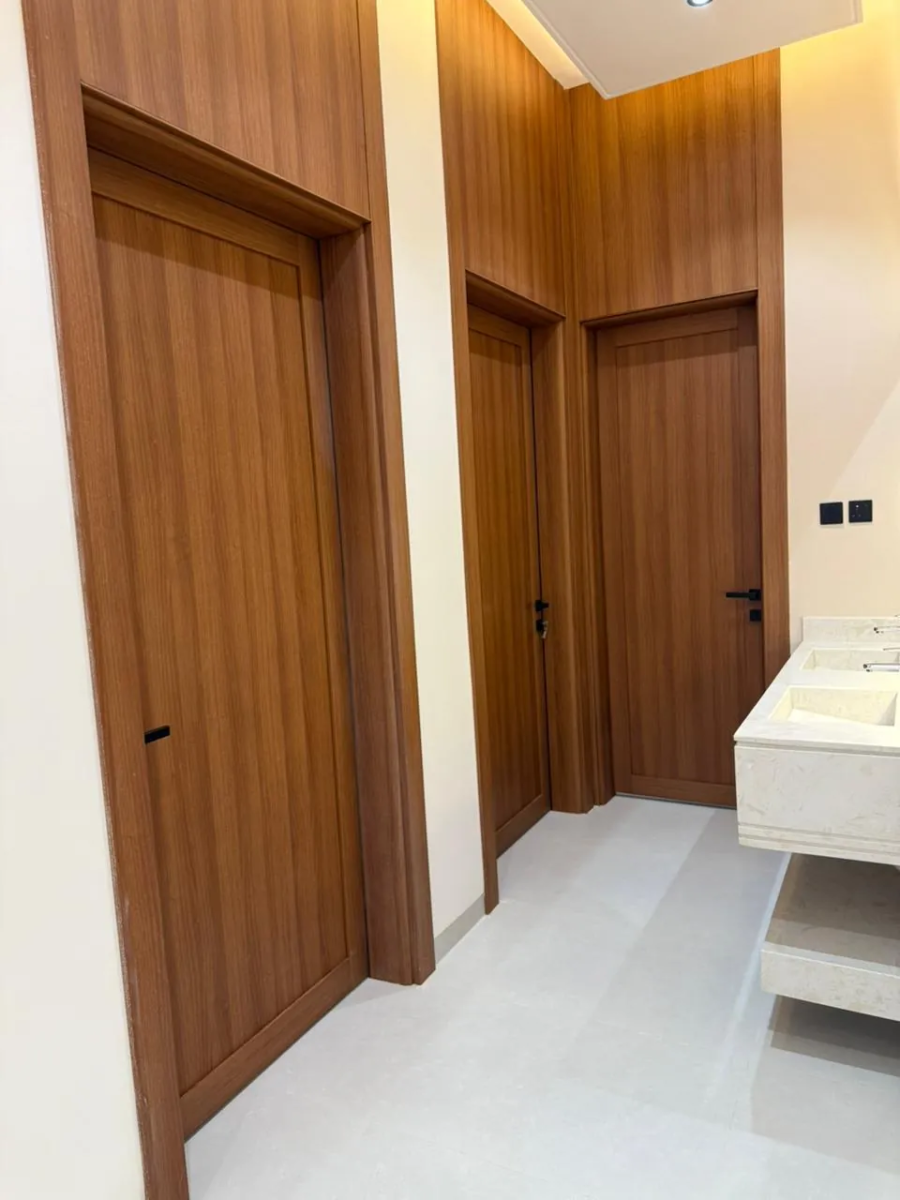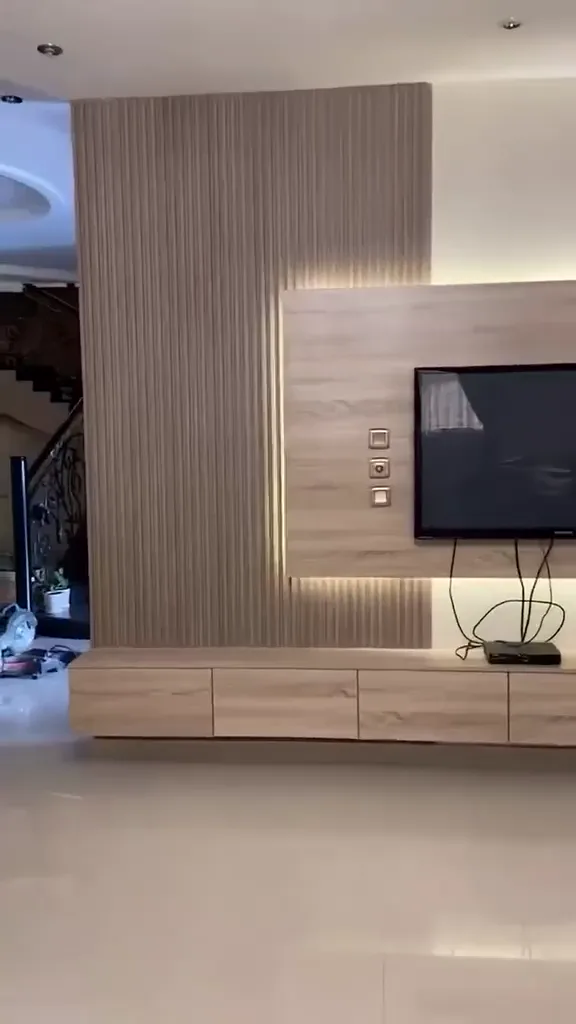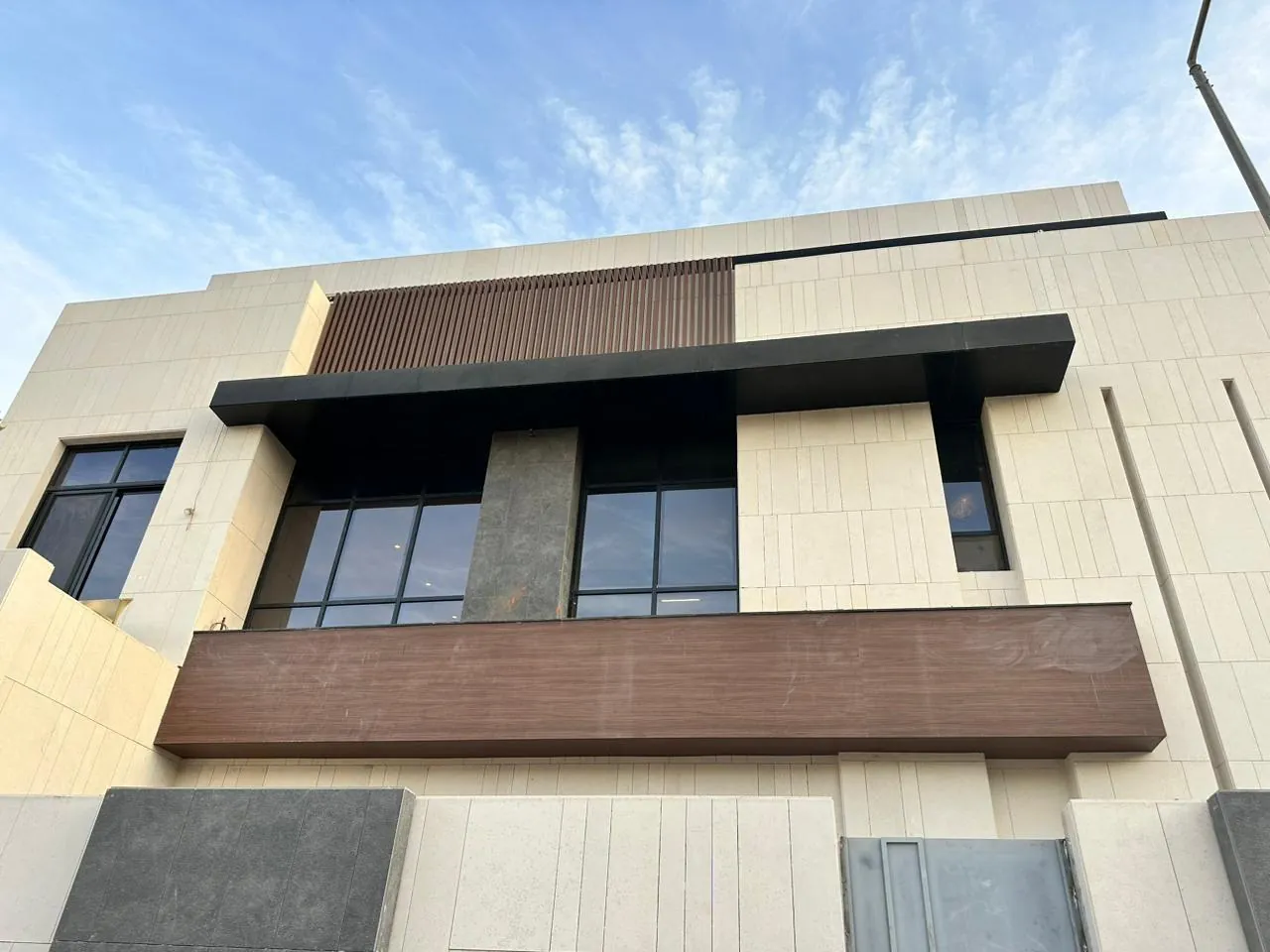


Marble-look panels are lighter, need fewer joints and install faster than natural marble, so they suit TV walls, bathrooms and interior feature walls. Natural marble remains the better choice for floors and majlis entrances where real veining and foot-traffic durability matter. The right pick depends on location, budget and how tolerant you are of stains and scratches.
Appearance: real veining or controlled pattern?
Natural marble is real stone, and every slab has its own veining and tone. That uniqueness is its prestige, and also its surprise factor: the slab that arrives on site can differ from the sample you approved, and matching veins between neighbouring slabs takes care and extra cutting waste.
Marble-look panels carry a high-resolution printed or engineered pattern, so pieces match each other and what you approve is what you get. The trade-off is that a trained eye can spot pattern repetition across large surfaces, and the surface lacks the depth of real stone under raking light.
- Natural marble: one-of-a-kind character and depth, with variation between batches and slabs.
- Marble-look panels: predictable pattern, consistent colour, and shades that are hard to source from a quarry.
Weight and fixing
Weight is the clearest difference. A 20 mm natural marble slab typically weighs over 50 kg per square metre and needs brackets, adhesive, mechanical fixing and experienced installers. Marble-look panels range from a few kilograms per square metre for light boards to somewhat more for thin porcelain slabs, and in every case are far lighter.
That means lower loads on gypsum partitions and ceiling frames, and quicker, quieter, less dusty installation inside a lived-in home.
Joints and large formats
Some panels come in large formats that cover a full wall height with one joint or none horizontally, which gives a clean, continuous look. Natural marble is cut to sizes set by quarry yield, slab integrity and transport, so there are usually more joints, each filled with a colour-matched compound.
A joint is not a flaw in itself. Planned well, it becomes a design feature, such as a narrow gap carrying linear lighting. Draw the joint layout before ordering, not during installation.
Heat, scratch and stain resistance
Natural marble is a relatively soft, porous calcium-based stone. It reacts to acids, holds stains if it is not sealed, and can scratch under sharp objects, though it tolerates ordinary heat well. Panels vary by material: some have a plastic-based core that resists water and stains but should stay away from strong heat sources, while porcelain or engineered-stone panels resist heat and scratches better.
| Property | Natural marble | Marble-look panels |
|---|---|---|
| Weight | Heavy, needs strong fixing | Light to moderate |
| Joints | More, depending on slab size | Fewer with large formats |
| Heat | Good tolerance | Depends on material; check the data sheet |
| Scratching | Scratches fairly easily | Varies; porcelain is tougher than soft boards |
| Stains and acids | Sensitive; needs sealing and renewal | Usually less porous and easier to clean |
| Uniqueness | Unique in every slab | Consistent and predictable |
Where each one suits
- TV walls: panels are practical. They are light, carry cable routes and back-lighting, and are easy to keep clear of heat-producing equipment. Natural marble is possible but needs a stronger frame and more careful ventilation planning.
- Bathrooms: choose moisture-resistant panels with few joints. If you prefer natural marble, seal it well and avoid acidic cleaners.
- Majlis and reception rooms: a panel feature wall delivers a rich look at a comfortable weight, while natural marble can be kept for specific elements such as a table or an entrance floor.
- Floors: natural marble or large-format porcelain is the right category, because floors carry loads, footsteps and dragged furniture.
Maintenance and cleaning
Maintenance is about lifestyle as much as specification. Families with children and frequent guests often prefer a surface that shrugs off juice and coffee. Riyadh’s dusty air also means frequent wiping, which favours low-porosity finishes.
- Natural marble: neutral cleaner, immediate wiping of spills, periodic sealer renewal, no acids.
- Panels: soft cloth and mild cleaner, no abrasive tools that could damage the surface layer.
How ControlMax approaches marble-look finishes
Our interior finishing and cladding service covers wall and ceiling cladding, including marble-look and stone-look panels. What sets us apart is that finishing and technology are planned together: wiring, lighting control, sensors, network and security are prepared inside the finish before it is closed, with one team under one contract. If you are planning a smart home, our main smart-home site explains what is worth preparing behind the walls.
The path runs from a free site visit to design and working drawings (including lighting and systems), a detailed quote and schedule, supervised build, and handover.
Frequently asked questions
Do marble-look panels really look like marble?
Usually, yes, at normal living distance and with well-planned lighting. The difference shows up under close inspection, or on very large surfaces where the vein pattern can repeat. Always approve a real sample and check it under the room’s own lighting before ordering.
Can marble-look panels be used in bathrooms?
Yes, provided the panel is moisture-resistant and the joints and edges are sealed with waterproof materials. Panel cores vary widely, so ask for the product data sheet and avoid direct shower-spray zones unless the manufacturer confirms suitability.
Which is better for floors?
Honed or polished natural marble, or large-format porcelain, suits floors because they handle foot traffic and furniture. Lightweight wall panels are not floor materials unless explicitly rated for it. Natural marble floors still need a suitable sealer and regular upkeep.
Does natural marble react to cleaning products?
Yes. Marble reacts to acids, strong bathroom cleaners, vinegar and lemon, which can dull the polish or leave pale marks. Use a neutral cleaner made for natural stone, wipe spills straight away and renew the sealer from time to time.
Are marble-look panels always cheaper?
Not always. Cost depends on the panel type, thickness, cutting, fixing and any lighting work. Panels often save installation time, waste and structural load, but prices vary, so compare two detailed quotations for the same surface area.
Can lighting be built into marble-look panels?
Yes, and it is best planned early. Light channels and cabling are prepared behind the panels or in deliberate shadow gaps before the wall is closed, so nothing has to be cut out later. This is how many TV walls and lit mirrors are built.
About ControlMax ControlMax is a Saudi company based in Riyadh offering smart homes, security and networks, with an interior fit-out and finishing division. Contact: unified number 920017618 · WhatsApp +966 59 611 4050 · Building 6604, Tabuk St, Al Izdihar, Riyadh 12485. Book a free site visit.