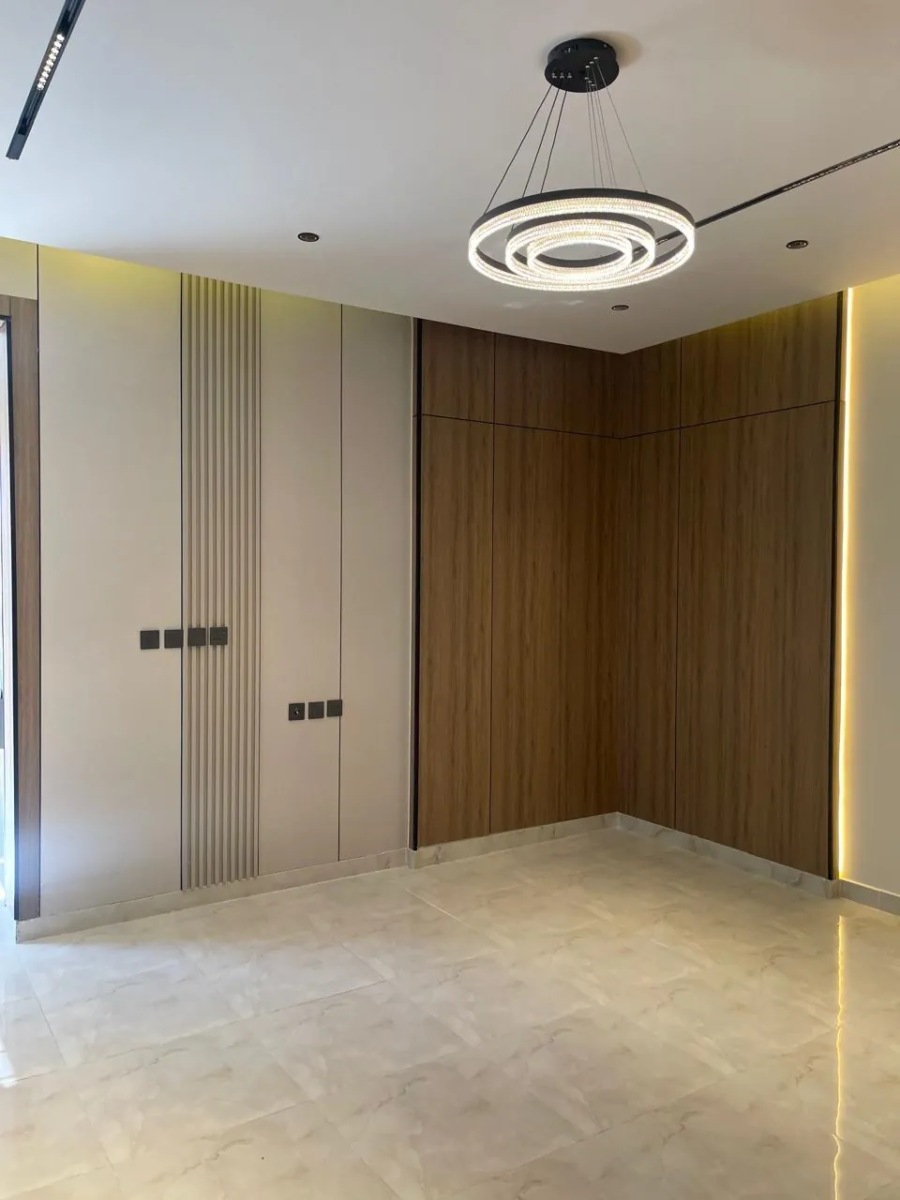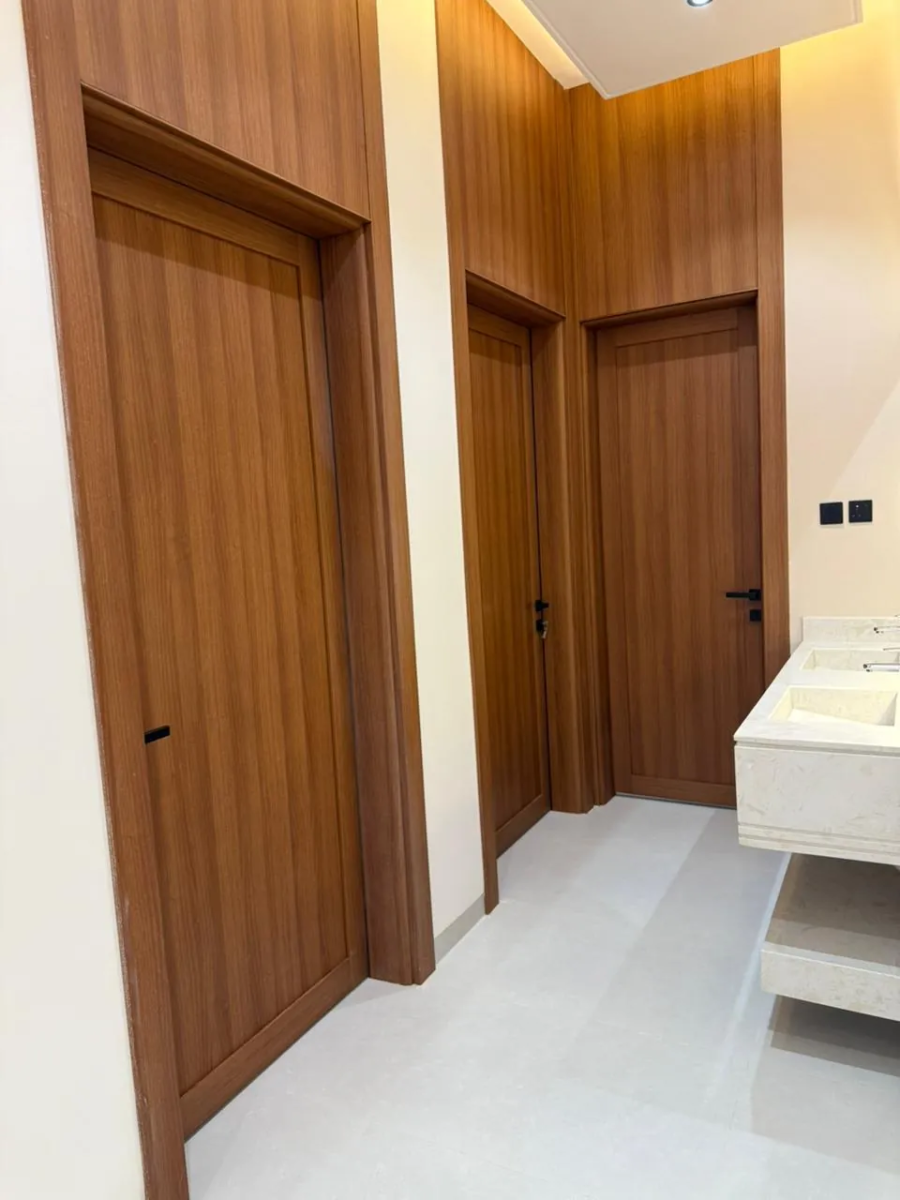

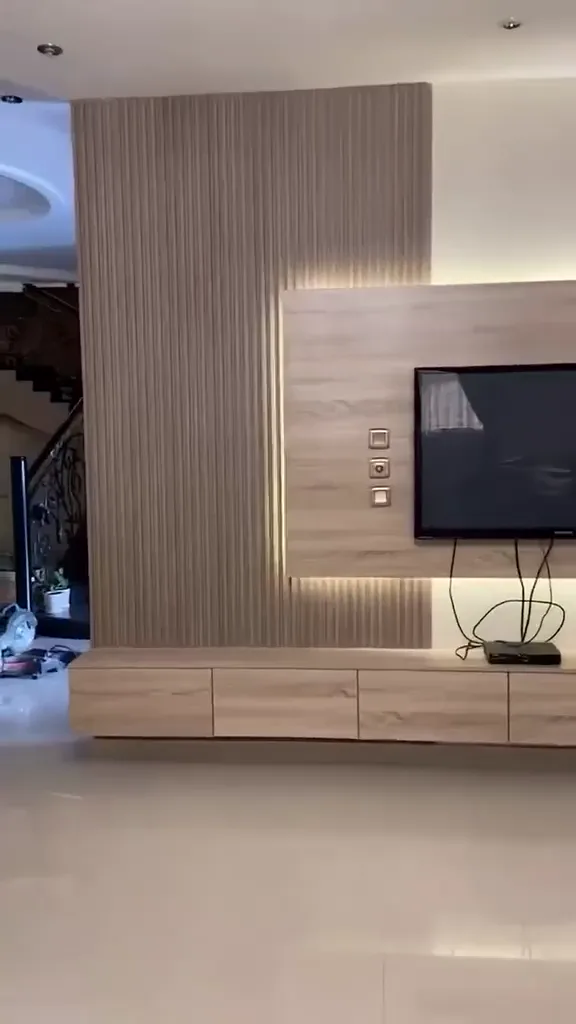
TV wall design works best when the look suits the seating area and the cabling, ventilation and lighting are prepared before the wall is closed. The six most common villa styles are a raised back-lit panel, vertical slats, a floating drawer unit, a curved wall with a marble-look plinth, full-height joinery, and a fireplace-style surround.
Decisions that come before the style
Before browsing pictures, settle three things: the screen size and viewing distance, whether you need storage, and where the equipment will live. A beautiful wall that blocks ventilation or makes devices hard to reach will annoy you within months.
Six TV wall styles
1. Raised back-lit panel
A panel stands a few centimetres off the wall and carries the screen, with LED lighting behind it creating a soft halo. Pros: visual depth, calm ambient light for evening viewing, and cables hidden behind. Cons: the LED power supplies need an accessible location, and dust collects in the gap if it is poorly detailed.
2. Vertical slats
Slats in wood or wood-look panels at regular spacing. Pros: they make the ceiling feel taller, add warmth, and can have an acoustic backing. Cons: dust gathers in the grooves, and alignment and joints must be precise.
3. Floating drawer unit
A low cabinet hung from the wall beneath the screen. Pros: practical storage, visible floor below that makes the room feel larger, and easy cleaning. Cons: the wall needs proper reinforcement for the load, and storage is limited to the unit’s size.
4. Curved wall with a marble-look plinth
A curved gypsum or joinery surface sitting over a base clad in marble-look panels. Pros: a soft, upscale look that eases hard corners in large lounges. Cons: fabrication is slower and more exacting, measurements and lighting need care, and cost usually exceeds that of flat surfaces.
5. Full-height joinery
A built-in unit from floor to ceiling housing the screen, display shelves and cabinets. Pros: maximum storage, fully concealed wiring and equipment, and a tidy result. Cons: it takes room space, needs precise measurement, and requires a ventilation plan for the devices.
6. Fireplace-style surround
A frame shaped like a fireplace, classic or modern, usually with a decorative or electric unit. Pros: a warm focal point for family majlis, and a natural fit for classic interiors. Cons: the screen must not be exposed to heat, and it may end up higher than comfortable eye level.
Quick comparison
| Style | Character | Storage | Watch out for |
|---|---|---|---|
| Back-lit panel | Calm, contemporary | Low | Access to LED supplies, dust |
| Vertical slats | Warm, natural | None | Cleaning the grooves |
| Floating unit | Light, practical | Medium | Wall reinforcement |
| Curved with plinth | Soft, luxurious | Low | Fabrication accuracy, cost |
| Full-height joinery | Tidy, complete | High | Ventilation, room depth |
| Fireplace style | Classic, warm | Low | Heat, screen height |
What to prepare behind the wall
A TV wall is decided long before painting. These items are done while the wall is still open:
- Power: an outlet behind the screen, outlets for devices, and separate supplies for the LED lighting.
- Spare conduits: an empty pipe for future cables so you never break the wall to change devices.
- Network and audio points: a network outlet, HDMI runs where needed, and speaker cable routes.
- Fixing: a solid timber or metal backing behind the bracket that carries the screen’s weight safely.
- Ventilation: vents or clear space so equipment can cool.
- Service access: a concealed hatch for lighting drivers and distribution.
- Control space: room for a receiver or wireless controller, and a Wi-Fi access point nearby.
Common mistakes
- Building the design first and trying to feed cables in later.
- Mounting the screen too high to suit the wall’s shape.
- Enclosing equipment in a space that cannot breathe.
- Ignoring the weight of the screen and speakers when choosing the bracket.
How ControlMax handles TV walls
Our fit-out division includes TV walls, media units and integrated LED lighting within TV wall and media unit work. What sets us apart is that finishing and technology are planned together: wiring, lighting, network and sensors are prepared inside the wall before it is closed, with one team under one contract. Because network quality affects streaming and gaming, our main smart-home site is a good next stop when planning network points.
The path runs from a free site visit to design and working drawings (including lighting and systems), a detailed quote and schedule, supervised build, and handover.
Frequently asked questions
What height should the TV be mounted at?
As a general rule, the centre of the screen should sit near eye level when seated. Majlis floor seating usually calls for a lower position than sofa lounges. Try sitting in the actual room and fix the height before the cables are run.
Can I place the TV above a fireplace?
Not if the fireplace produces real heat, because heat damages screens. A decorative or low-heat electric fireplace can work if the manufacturer confirms it is safe beneath a TV. Also check that the screen height stays comfortable for seated viewing.
Do I need ventilation behind the TV and media unit?
Yes. Receivers, game consoles and amplifiers produce heat. Leave vents or sufficient clear space, and avoid sealing equipment inside a tight cabinet. If the equipment sits in another room, have the cable route ready from the start.
Which design hides cables best?
Any design with a prepared cable route inside the wall or behind the panel. A raised panel and full-height joinery hide cables most completely, as long as spare conduits and an access hatch are included without spoiling the look.
Do wood slats need special care?
They need dust removed from the grooves with a soft brush or a gentle vacuum nozzle, and protection from high humidity. In dusty Riyadh air, choose well-judged slat spacing or a dark backing so that dust shows less.
Can a TV wall connect to a smart home system?
Yes, and it is easy if planned early: a network point, power outlets for controllers, controllable lighting and a route for sensors. Adding these after the wall is closed is costly and means cutting into and re-finishing the surface.
About ControlMax ControlMax is a Saudi company based in Riyadh offering smart homes, security and networks, with an interior fit-out and finishing division. Contact: unified number 920017618 · WhatsApp +966 59 611 4050 · Building 6604, Tabuk St, Al Izdihar, Riyadh 12485. Book a free site visit.