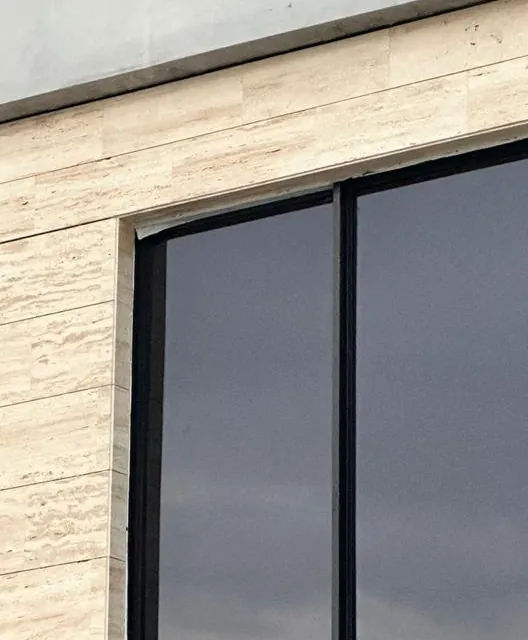
Stone-look panels are a lightweight alternative to natural stone that give facades and interior walls the character of stone with less weight and faster installation. They are fixed on a metal sub-frame or with adhesive, depending on location. They perform in Saudi sun and heat when rated for exterior use and installed correctly, but have limits for impact and load.
What are stone-look panels?
They are manufactured panels that imitate the texture, colour and relief of stone. The materials differ: light composite panels, fibre-reinforced cement boards, thin porcelain or ceramic slabs, and flexible stone veneers. Each differs in weight and in its tolerance to heat, water and impact, so the useful question is not “is it a stone alternative?” but “what is it made of, and is it rated for facades?”
How they compare with natural stone
Natural stone such as limestone, granite and marble is durable, long-lived and deeply rooted in Saudi architecture. It is also heavy, needs strong brackets and skilled hands, takes longer to fit, and requires a wall or frame able to carry it. Variation between batches can show in colour and texture.
| Factor | Natural stone | Stone-look panels |
|---|---|---|
| Weight | Very heavy | Light to moderate |
| Installation speed | Slower, specialist labour | Generally faster |
| Colour consistency | Varies between batches | Consistent and predictable |
| Lifespan | Very long | Depends on material and system |
| Impact resistance | Good | Lower in some types |
| Authenticity | Real stone | Visual imitation |
Fixing systems for facades and interiors
A panel installation succeeds or fails on its fixing more than on the panel itself. There are three main approaches:
- Direct adhesive: suits interiors and light panels on a flat, dry, prepared surface, with an adhesive matched to the material and the temperature.
- Mechanical fixing on a metal sub-frame: the usual choice for exterior walls and height. Aluminium or corrosion-protected steel rails carry the panels on clips or concealed fasteners.
- Ventilated facade: an air gap behind the cladding lets heat and moisture escape and reduces how much solar heat reaches the wall, which is well suited to hot climates.
Whatever the system, movement joints, corners, edges and water paths must be detailed, wind loads considered, and the work should follow the Saudi Building Code in general terms and applicable fire-safety requirements.
Sun, heat and dust in Riyadh
A Saudi facade faces strong UV, high summer temperatures, big day-to-night swings, dust and sandstorms. Panels respond in predictable ways:
- UV: untreated colours can fade and surface layers weaken. Ask for exterior-rated material.
- Heat and expansion: panels expand and contract depending on colour and material, so movement joints are left, and very dark tones are avoided on walls in direct sun.
- Dust and sand: dust settles in rough textures, so choose a finish that is easy to wash and avoid abrasive tools.
- Rare but heavy rain: water needs a proper drainage path behind the cladding and at the base.
Limitations to know about
- Light panels are not structural and must not carry more than the manufacturer specifies.
- Impact resistance is lower in some types, so protect low zones near parking and walkways.
- Fire performance varies by material and must be checked against the rules for facades.
- An imitation does not replace real stone where full heritage character or genuine texture is required.
- Quality differs between suppliers, so ask for technical data and a physical sample.
Where to use them
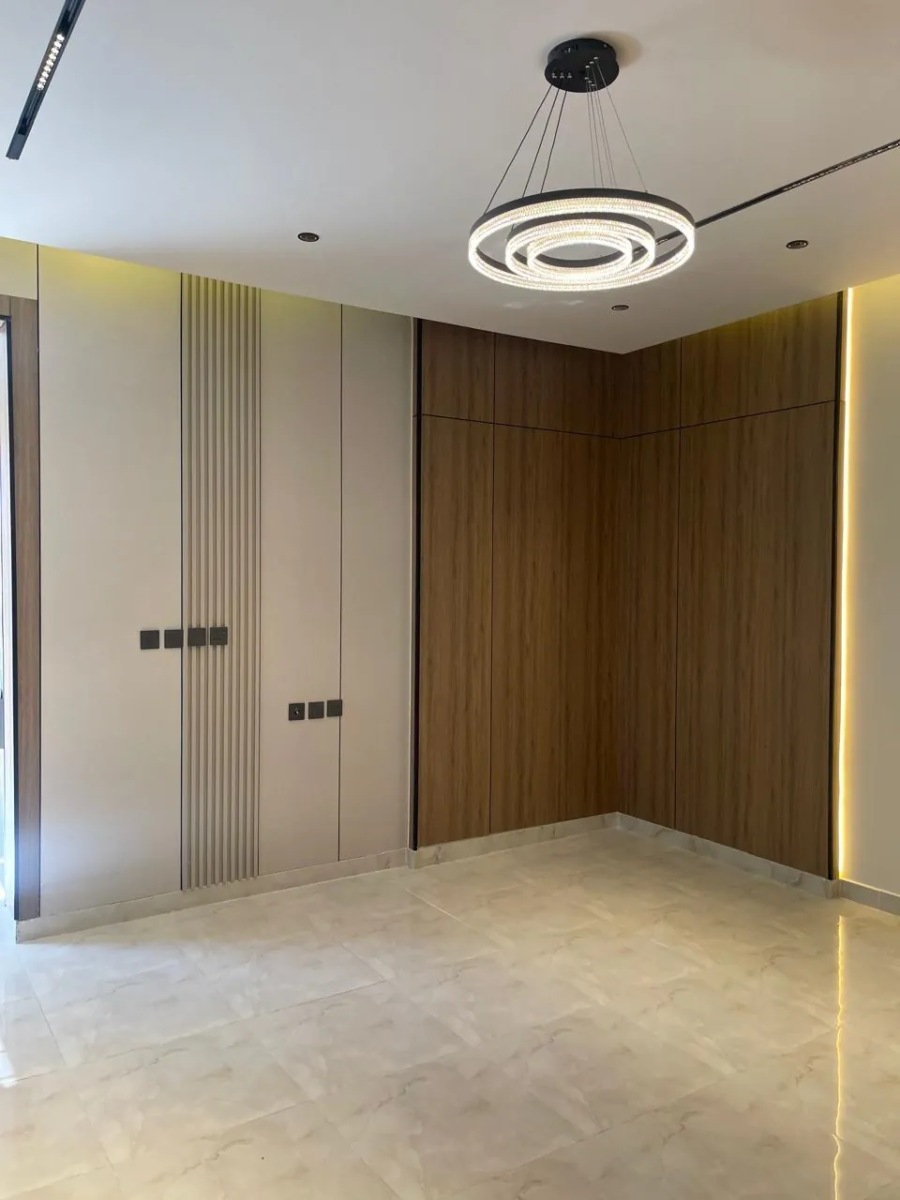
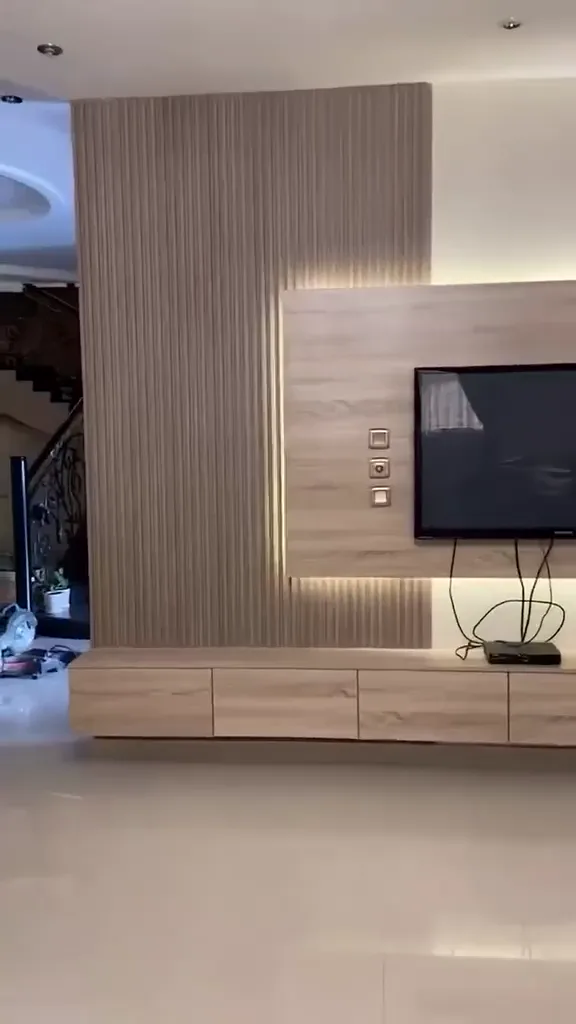
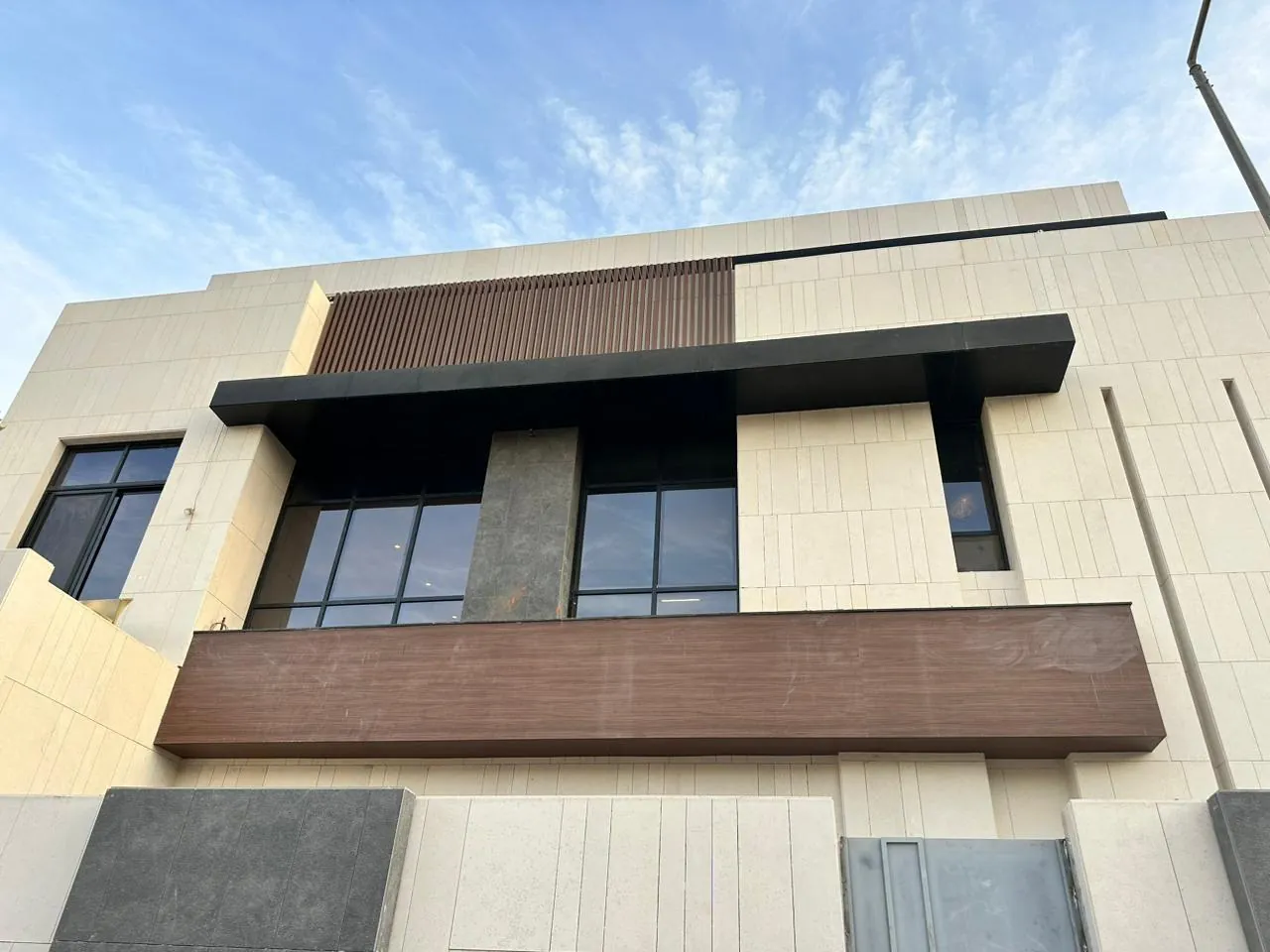
Outdoors, they suit main facades, boundary walls, entrances and columns, provided the panel is exterior-rated. Indoors, they suit majlis walls, entrance halls, TV walls, decorative fireplace surrounds and long corridors, often paired with grazing linear lighting that brings out the texture.
How ControlMax handles facades
Our exteriors and facades service covers stone and stone-look cladding, wood-tone exterior cladding, canopies, outdoor lighting and smart gates. What sets us apart is that finishing and technology are planned together: cables, lighting points and security are prepared inside the cladding before it is closed, with one team under one contract. If cameras are part of your plan, our main site covers the security side, and the materials page helps you compare finishes.
The path runs from a free site visit to design and working drawings (including lighting and systems), a detailed quote and schedule, supervised build, and handover.
Frequently asked questions
Can stone-look panels be used on exterior facades in Riyadh?
Yes, if they are manufactured for exterior use: resistant to UV, heat and weather swings, and installed with a suitable system. An interior panel is not automatically fit for outdoors, so request the facade data sheet and follow the manufacturer’s recommended fixing method.
What is the difference between adhesive and mechanical fixing?
Adhesive fixing suits light panels on flat, prepared surfaces and is common indoors. Mechanical fixing onto a metal sub-frame is preferred for facades and height because it copes with wind load and thermal movement, allows a ventilated cavity, and does not rely on glue alone.
Will panel colours fade in the sun?
Gradual fading can occur with long exposure if the pigments or surface layer are not UV-stable. The risk drops with UV-treated panels, mid-tone colours, and a written manufacturer warranty whose conditions you have actually read.
Are stone-look panels really lighter than natural stone?
Usually by a wide margin. Natural stone cladding needs heavy brackets and a strong wall, while light panels reduce the load considerably. Weight still varies by type, so ask for the weight per square metre and confirm the wall can carry it.
Can lighting and cameras be installed on a clad facade?
Yes, but plan them before cladding. Cables are routed inside the sub-frame or behind the panels, fixture and camera positions are set on the drawings, and every entry point is sealed against water and dust.
Do the panels need maintenance?
Generally light: periodic washing of dust with water and a mild cleaner, no abrasive tools, an annual check of joints and sealants, and a look at the fixings after severe weather. The right interval depends on panel type and facade location.
About ControlMax ControlMax is a Saudi company based in Riyadh offering smart homes, security and networks, with an interior fit-out and finishing division. Contact: unified number 920017618 · WhatsApp +966 59 611 4050 · Building 6604, Tabuk St, Al Izdihar, Riyadh 12485. Book a free site visit.