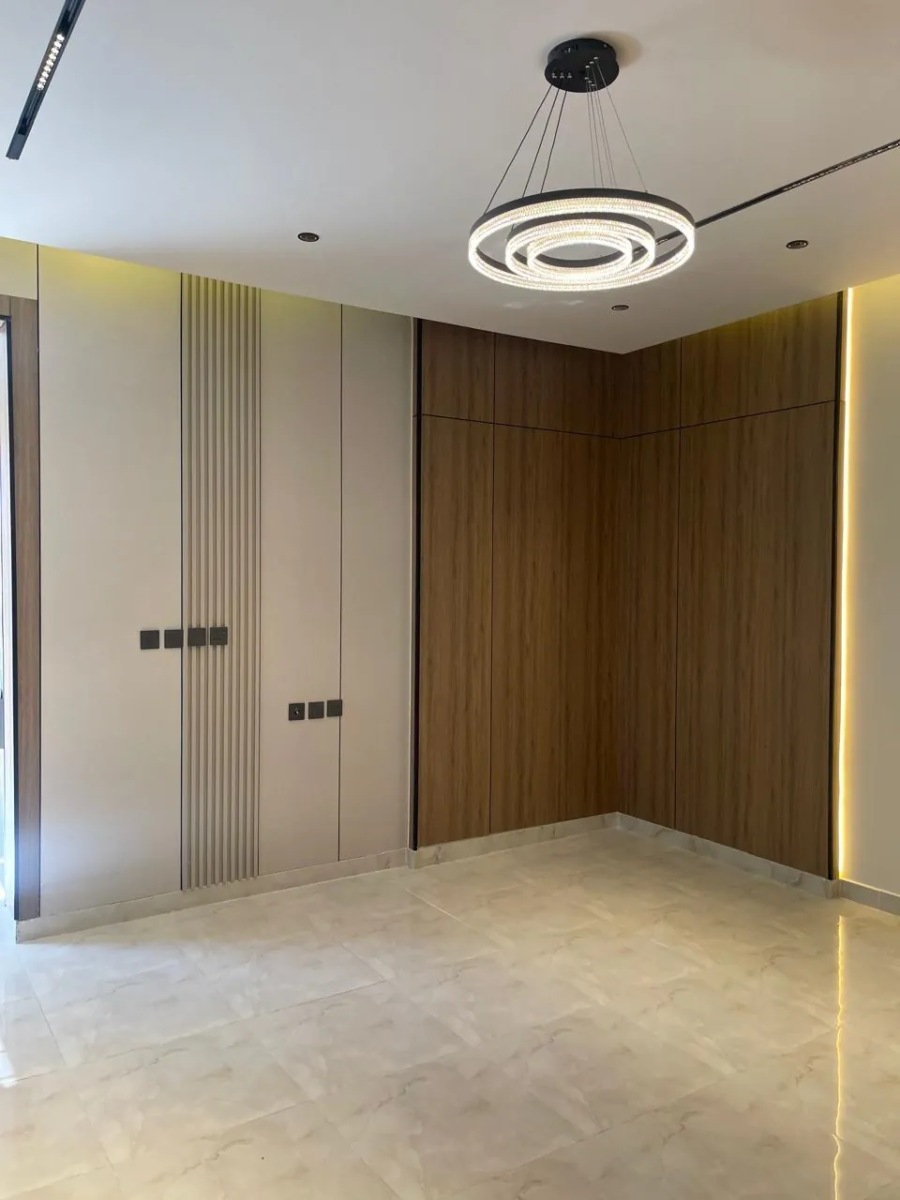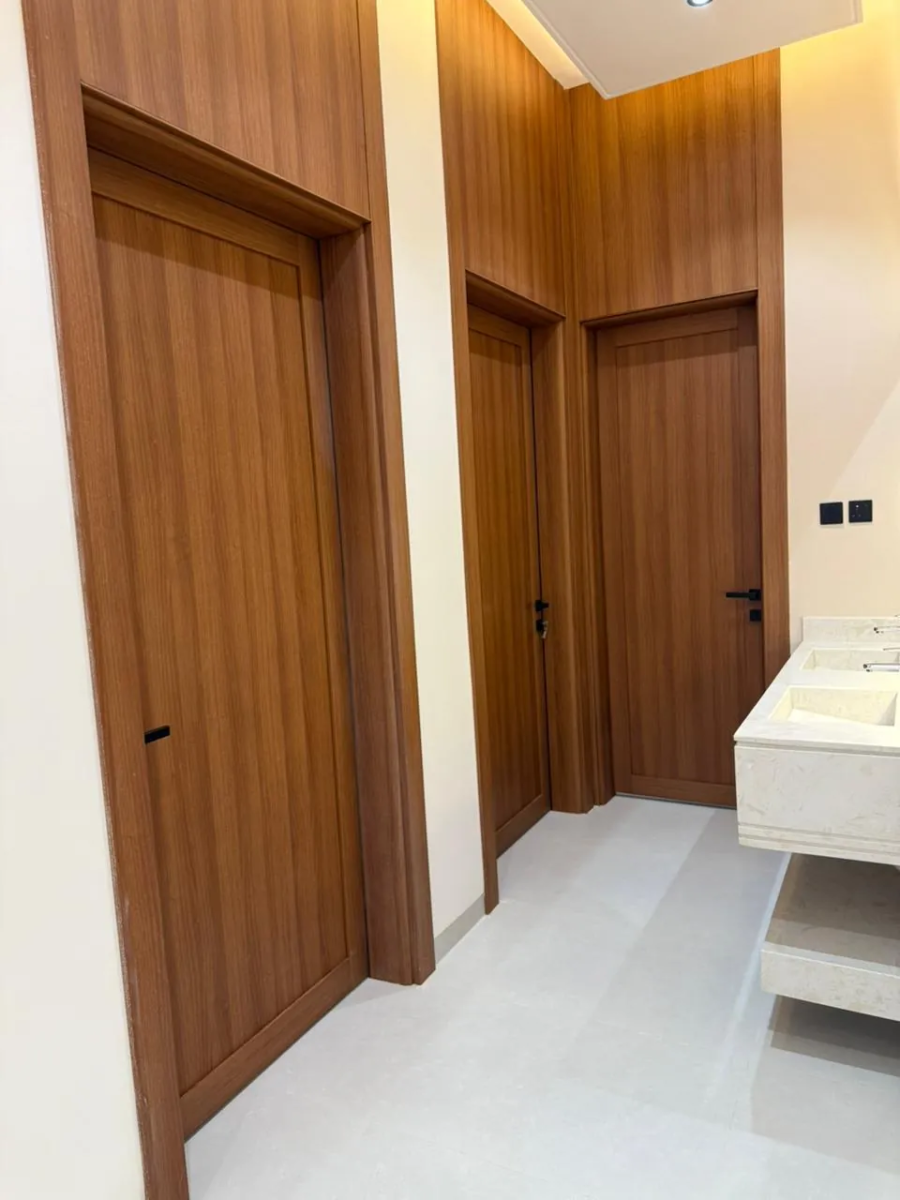

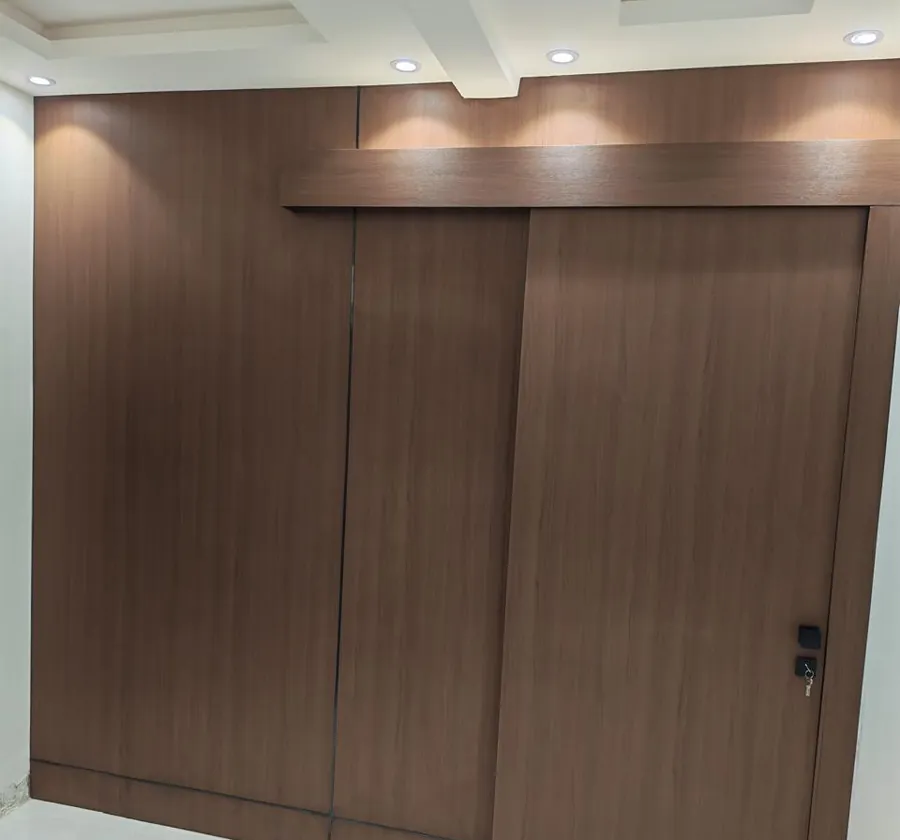
The right wall cladding depends on where the wall is. Solid wood and veneer suit majlis rooms and other dry spaces, treated MDF or HDF suits living rooms and bedrooms, and WPC or PVC panels are safer near kitchens, bathrooms and damp areas. In every case, fit them on a ventilated frame with moisture protection behind.
What types of wood and wood-look panels exist?
“Wood” and “wood-look” are often mixed up, yet each material reacts differently to heat and moisture. Here is a quick comparison of the types used most often inside villas:
| Type | What it is | Main strength | Main caution |
|---|---|---|---|
| Solid wood | Sawn, kiln-dried timber boards | Authentic look, can be refinished | Moves with humidity changes; needs pest treatment |
| Wood veneer | Thin slice of real wood on a backing board | Natural grain with better stability than solid wood | Dislikes direct water; limited sanding |
| MDF / HDF | Compressed wood fibre and resin, faced with veneer, melamine or foil | Flat surface, precise routing and detailing | Swells when wet, so use moisture-resistant grades with sealed edges |
| WPC | Wood fibre mixed with polymer | Resists moisture and insects | Heavier and often costlier; print depth is shallower |
| PVC | Plastic panels with a wood-look surface | Light, waterproof, easy to wipe | Can deform under direct heat; check fire behaviour |
Where does each material fit in a villa?
Start with what the room does, not only with the sample you like:
- Majlis and reception rooms: dry, formal spaces where solid wood or veneer on a stable core gives the richest result.
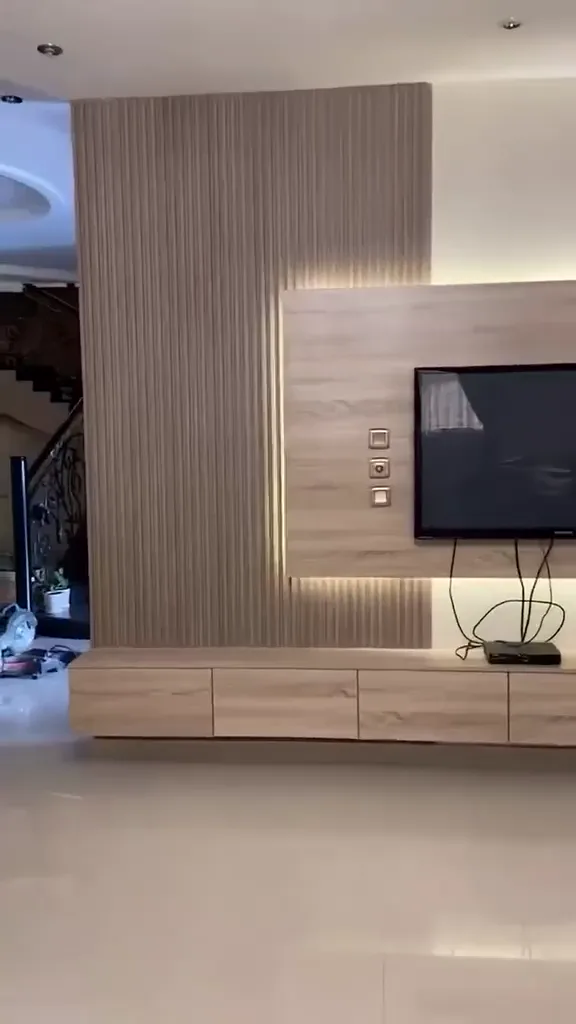
- Family living room and TV wall: veneered or wood-look MDF/HDF is a practical choice, especially when wiring and lighting sit behind the wall and the panels need precise cutting.
- Bedrooms: most types work; choose low-emission boards and ventilate the room after fitting.
- Kitchen-adjacent walls, bathrooms and laundry: WPC, PVC or a fully sealed moisture-resistant board, kept away from direct water.
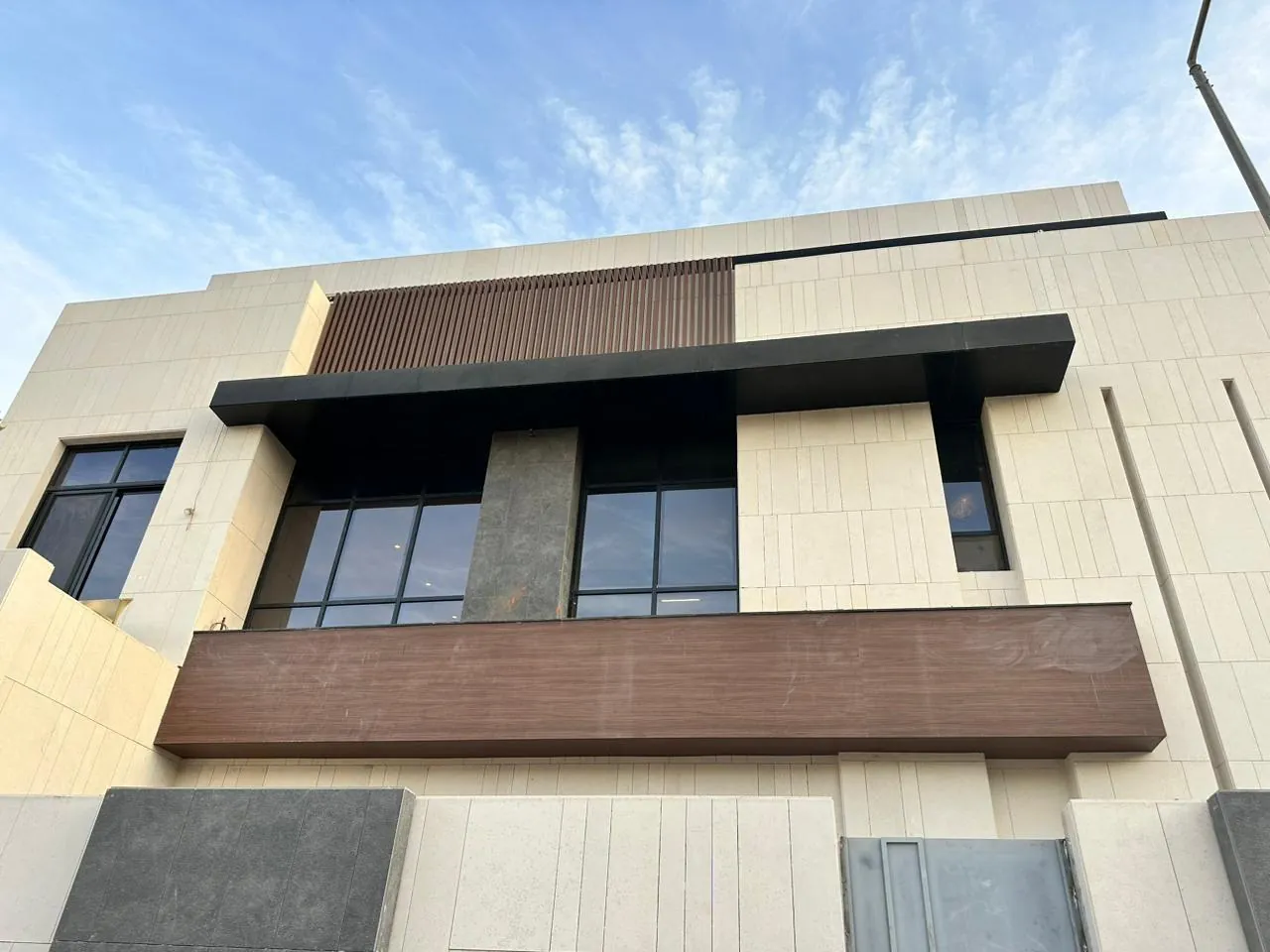
- Interior faces of sun-exposed external walls: add a moisture barrier and a ventilated gap so heat and damp do not reach the panel directly.
Moisture and heat in Saudi homes
Riyadh air is mostly dry, but that does not mean a house has no moisture problems. Air-conditioning produces condensation, temperatures swing between inside and outside, and damp can come from bathrooms, kitchens and sometimes from roofs and external walls. Very dry indoor air can also make solid wood shrink and open fine gaps between boards.
Heat mostly affects adhesives and plastics. Keep PVC and similar panels away from ovens, heaters and hot light fittings, and avoid strong afternoon sun through west-facing glass. Always ask for fire-test data for the product and make sure interior finishes meet the Saudi Building Code and civil defence requirements.
How wall cladding should be installed
- Survey the wall: check flatness and make sure there is no damp or cracking.
- Prepare services first: run power, lighting, cables and sensors before the wall is covered.
- Build the sub-frame: fix treated battens at regular spacing with a ventilated gap, and add a moisture barrier on external walls.
- Acclimatise the panels: leave them in the room for about two days before fitting.
- Fix the panels: use concealed clips or screws with a suitable adhesive, and leave expansion gaps at floor, ceiling and between large boards.
- Finish and allow access: treat edges and corners, and keep service hatches for junction boxes and switches.
Cleaning and maintenance
Day-to-day care is simple: dust with a soft cloth or a brush attachment, which matters in Riyadh because dust settles in panel joints. Wipe with a barely damp cloth and dry straight away. Avoid abrasive or strong alcohol cleaners on lacquered or veneered surfaces.
- Natural wood needs periodic surface treatment, depending on the finish.
- PVC and WPC panels clean with a mild detergent, without flooding the joints.
- If edges swell or change colour, there is probably moisture behind the panel; trace the source before replacing anything.
How ControlMax handles wall cladding
The ControlMax fit-out division installs wall and ceiling cladding in wood and wood-look panels as part of its interior finishing and cladding service. The process runs from a free site visit to design and working drawings that include lighting and systems, then a detailed quote and schedule, and finally building under engineering supervision up to handover. Finishing and technology are planned together, so wiring, sensors and lighting are prepared inside the cladding before it is closed, as in this living-room wall cladding project. For the technology side, see the ControlMax smart-home site.
Frequently asked questions
Which wall cladding is best for a majlis?
A majlis is a dry, formal space, so solid wood or veneer on a stable board usually suits it. Veneered HDF reduces movement and cracking. Whatever you pick, fit it on a proper frame and leave expansion gaps.
Can solid wood cope with Riyadh conditions?
Yes, indoors in air-conditioned rooms, if it is well dried, treated and fitted correctly. Dry air can cause shrinkage and fine gaps, so use expansion gaps, a suitable finish, and keep it away from direct sun and damp sources.
Can MDF panels be used in a bathroom or kitchen?
Only as a moisture-resistant grade with fully sealed edges, and away from direct water. In wet areas it is safer to choose WPC, PVC or another waterproof panel, because ordinary MDF swells when it gets wet.
What is the difference between WPC and PVC wall panels?
WPC blends wood fibre with polymer and is denser and stiffer; PVC is a lighter plastic panel that is easier to fit. Both resist moisture, but PVC is more sensitive to high heat, so check each product’s data.
Does cladding need a ventilated gap behind it?
In most cases, yes, especially on external walls. A small gap lets moisture escape, protects the panel, and gives room for power and lighting cables, with a moisture barrier added where the wall needs it.
When should electrical and lighting work be done?
Always before the cladding goes on. Deciding where lights, switches, network cables and sensors sit at design stage avoids cutting finished panels later and lets you keep hidden service hatches.
About ControlMax ControlMax is a Saudi company based in Riyadh covering smart homes, security and networks, together with an interior fit-out and finishing division. Contact: unified number 920017618, WhatsApp +966 59 611 4050, Building 6604, Tabuk St, Al Izdihar, Riyadh 12485. Book a free site visit.